
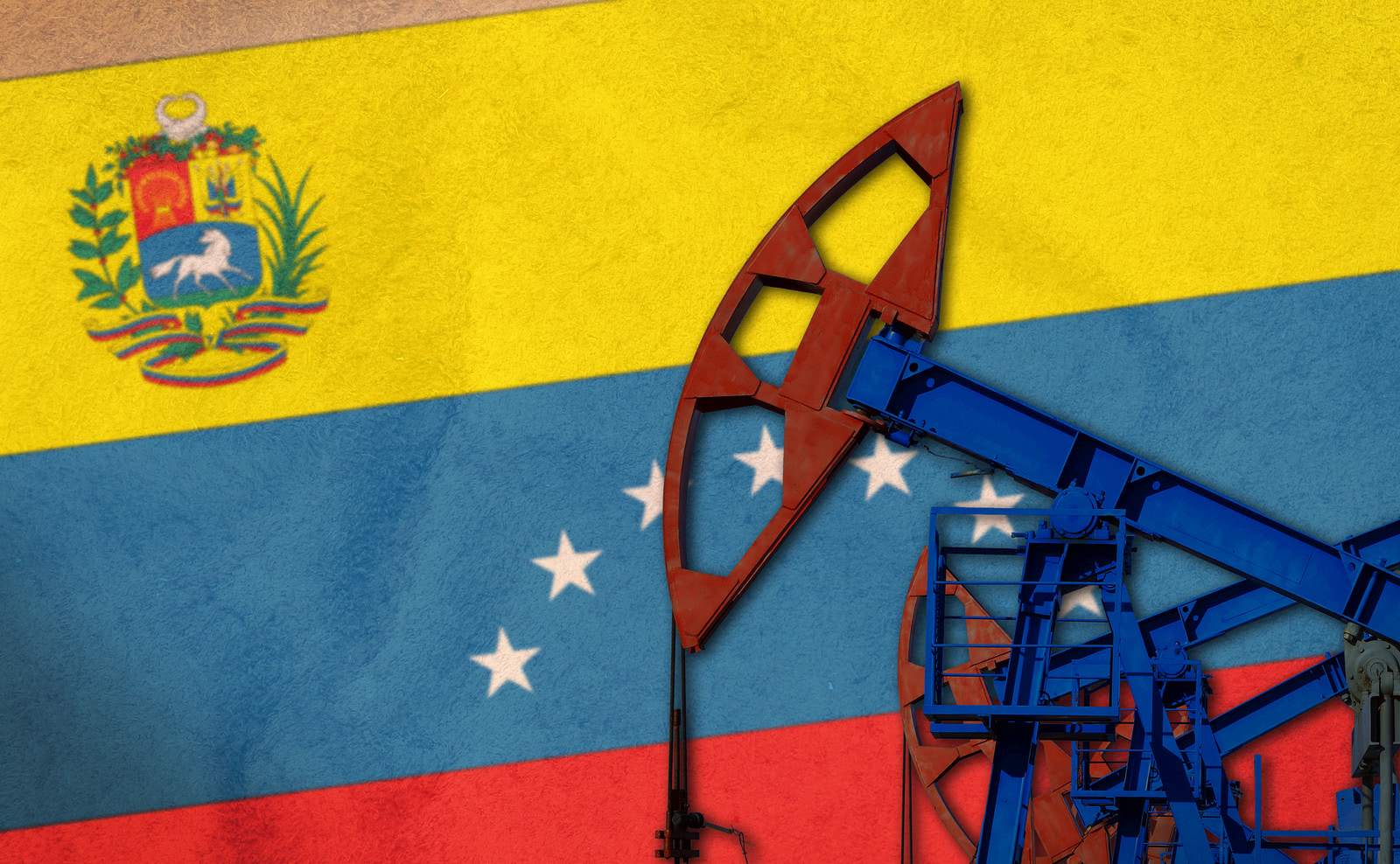
The sudden action taken by the United States against Venezuela not only quickly changed the political situation in the country, but also brought the world's largest crude oil reserves to a crossroads of energy fate.
According to reports, US President Donald Trump confirmed that the United States has captured Venezuelan President Maduro through military operations and announced that the United States will "temporarily manage" the country until the so-called "safe transition" is achieved. Venezuelan opposition leader Maria Machado immediately said that "popular sovereignty" has arrived and is ready to take over power.
Trump also declared that he would invest billions of dollars to repair Venezuela's dilapidated and nearly paralyzed oil infrastructure and promote the recovery of its oil industry, led by major U.S. oil companies.
However, the industry generally believes that the reality is far more complex than the slogan: Venezuela's oil facilities are seriously aging; the legal environment is chaotic and the political future is unclear; Even with capital investment, it will still be a long and difficult process for crude oil production to truly recover
Regime change may happen overnight, but it is not easy to re-flow "black gold".
Capacity gap: Venezuela's oil revival is not so easy
Although Trump claims that American companies will quickly take over Venezuela's oil industry, the reality is far more difficult than imagined. Reuters analysis pointed out that even with billions of dollars invested, the country's crude oil production will be difficult to truly recover in the next few years.
You know, Venezuela was once an oil powerhouse - as one of the founding countries of OPEC, it produced as high as 3.5 million barrels per day in the 1970s, accounting for more than 7% of the world; However, since 1999, due to management chaos, long-term lack of investment, and international sanctions, the oil infrastructure has been seriously aging or even paralyzed
Today, Venezuela's daily production has fallen to about 1 million barrels, and most of it is super-heavy crude oil – expensive to extract and refin, polluting and weakly competitive in the market.
Experts point out that the problems do not end there: the number of drilled wells is seriously insufficient; the power grid is unstable and power outages are frequent; and oil equipment is even often stolen or destroyed
Francisco Monaldi, a Latin American energy expert at Rice University, said the physical obstacles are huge. Another energy strategist, Thomas O'Donnell, predicts that even if the political transition goes well, it will take at least five to seven years to really see a significant recovery in production
To put it simply, regimes can change overnight, but rebuilding a collapsed oil industry system requires not only money, but also time, stability and systematic investment.
The US oil giant wants to return to Venezuela? It's not that simple
American energy giants such as ExxonMobil and ConocoPhillips, which have invested here, must now meet several hard conditions to come back:
ensure that the money is received (e.g. government guarantee of payment); Basic security (personnel and assets cannot be threatened at any time); US sanctions against Venezuela must be officially lifted.
Reuters quoted analysts as saying: As long as these three are not satisfied, large companies will not end up easily.
In the 2000s, Venezuela fully nationalized the oil industry and forcibly recovered the assets of foreign-funded enterprises, resulting in companies such as ExxonMobil and ConocoPhillips being forced to withdraw and filing international arbitration claims for many years.
To date, Chevron is the only major U.S. oil company still operating in Venezuela — and with limited participation under special licenses.
Who is most likely to come back first?
Expert Francisco Monaldi believes that ConocoPhillips may be the most positive one, as Venezuela owes it more than $10 billion. For ConocoPhillips, returning to the local area may be the only chance to get back this huge sum. However, the company has only said that it is "closely monitoring the situation" and has not committed to investing.
The key is also legal reform, Mark Christian, business director of CHRIS Well Consulting, pointed out that Venezuela must change the law to allow foreign companies to truly own project interests and freely remit profits to attract large-scale new investment.
Regime change does not mean stability, and Venezuela is still in a high-risk "vacuum"
In addition to business interests, geopolitical uncertainty is the biggest reason to deter investors.
Brian Fonseca, director of the Jack D. Gordon Institute for Public Policy at the University of Miami, warned that the next 48 hours will be extremely critical.
Overthrowing Maduro does not mean an automatic transfer of power – his supporters, the military and local forces may still resist, and the risk of civil war or large-scale conflict is real.
The market is also closely watching the military's movements: energy analyst Phil Flynn pointed out that if the military sides with the opposition, the situation is expected to stabilize, which is good for oil prices and investment; But once it falls into chaos or violent conflict, the market will fluctuate violently.
There are also people who remind not to repeat the same mistakes. Ed Hirs, an energy expert at the University of Houston, said: The United States has engaged in regime changes in Iraq and Libya in the past, and as a result, U.S. oil companies have not reaped much practical benefits. He fears that Venezuela may follow the same old path - politics has changed, but the oil business is still difficult.
Currently, Chevron, the only large U.S. company still operating locally, said its top priority is to ensure the safety and integrity of its employees and assets, emphasizing that it will strictly abide by the law.
Other international capital generally chooses: wait and see first, wait and see, and wait for the dust to settle.
Market reaction: Oil prices have not risen sharply, and gold prices have not jumped
Despite significant US actions against Venezuela, commodity markets reacted relatively calmly.
Let's look at oil prices first: Since the beginning of this year, global crude oil has been under pressure from weak demand and OPEC+ may increase production, and supply is not tight.
Energy analyst Phil Flynn pointed out that although the incident may bring a little "psychological boost", Venezuela's current production of 1 million barrels per day can easily be supplemented by Saudi Arabia, the United States or other oil-producing countries, so the impact on oil prices is limited.
Let's look at gold prices: Venezuela's gold production accounts for a small proportion of the world, and it has little impact on the market.
Jingtai believes that unless the United States intervenes further militarily and Venezuela fights back fiercely, triggering a larger conflict, the support effect of this incident on gold prices is weak.
In general, Trump wants to restart the "oil giant" by taking over Venezuela, but the reality is very skinny - the infrastructure is dilapidated; Legal disputes; The political situation is extremely unstable. These challenges mean that it is almost impossible to see Venezuelan oil return to the market in large quantities in the short term, and therefore the impact on global energy and precious metals prices is also quite limited.